
AI Sales Training: The Complete Guide to Building High-Performing Sales Teams
AI Sales Training: The Complete Guide to Building High-Performing Sales Teams
Sales is the engine of business growth, yet developing top-performing sales reps remains one of the toughest challenges companies face. According to CSO Insights, only 27% of sales representatives consistently hit their quotas, with training quality identified as the single most influential factor. Traditional sales training — instructor-led workshops, role-play exercises, field ride-alongs — has been the standard for decades, but it suffers from delayed feedback, subjective evaluations, and an inability to scale.
AI-powered sales training is fundamentally changing how organizations develop sales talent. Through speech recognition, real-time analytics, and intelligent feedback systems, AI delivers precise, measurable coaching at every stage of the training process.

Five Pain Points of Traditional Sales Training
1. Delayed and Subjective Feedback
In traditional training, managers typically provide feedback after ride-alongs or recorded call reviews — often days or weeks later. Worse, feedback depends heavily on the manager's personal experience and biases. Two different managers might give contradictory advice, leaving new reps confused about what actually works.
2. Impossible to Scale
A senior manager can effectively mentor five to eight reps at a time. When a company is scaling rapidly and needs to train dozens or hundreds of new hires simultaneously, quality inevitably drops.
3. No Objective Data
"Your opening needs more energy." "Be more natural with clients." These well-intentioned but vague comments leave reps wondering exactly what to change. Traditional training lacks quantitative metrics, making it impossible to pinpoint specific areas for improvement.
4. Limited Practice Opportunities
Real client meetings are both valuable and high-stakes. Sending underprepared reps into live conversations risks not only lost deals but also damaged client relationships.
5. Untraceable ROI
After investing significant resources into training programs, leadership wants to know: did it actually work? Traditional methods offer virtually no way to connect training activities to measurable outcomes.
How AI Redefines Sales Training
Recording and Analyzing Every Training Interaction
The foundation of AI sales training is the ability to capture and analyze every training session in detail. TANPAN.AI, for instance, uses real-time speech-to-text (STT) technology powered by Azure Speech Services to transcribe conversations as they happen.
But this goes far beyond simple recording. The AI automatically flags key moments — the instant a prospect raises an objection, a successful reframe by the rep, a critical pivot before a close attempt. After the session, both the trainee and their manager can review these flagged segments for targeted discussion and improvement.
Real-Time AI Feedback During Role-Play
Role-play has always been the cornerstone of sales training, but the traditional approach is inefficient. Managers must simultaneously play the customer, observe the rep's performance, and take mental notes — a cognitive load that limits the quality of feedback.
TANPAN.AI's real-time AI coach transforms this dynamic. During role-play sessions, the AI analyzes the rep's performance live and provides actionable suggestions:
- Talk track optimization: When a rep uses weak phrasing, the AI suggests more compelling alternatives in real time
- Tone and emotion analysis: Detects shifts in vocal tone, alerting reps when they sound rushed, uncertain, or lacking enthusiasm
- Pacing control: Analyzes conversation rhythm, reminding reps to pause, listen, and avoid one-sided monologues
- Objection handling scoring: Evaluates the rep's response strategy when the simulated prospect pushes back
Post-Session Deep Analysis and Personalized Recommendations
After each training session, TANPAN.AI automatically generates a comprehensive analysis report covering:
- Conversation structure: Time allocation and quality scores for each phase — opening, discovery, solution presentation, objection handling, and close attempt
- Keyword frequency: Usage patterns of positive language ("solution," "value," "outcome") versus hedging language ("maybe," "probably," "I think")
- Talk-to-listen ratio: The balance between rep and customer speaking time — in effective sales conversations, reps should listen more than they talk
- Prioritized improvements: Specific, actionable suggestions ranked by impact
Measuring Training Effectiveness with Data
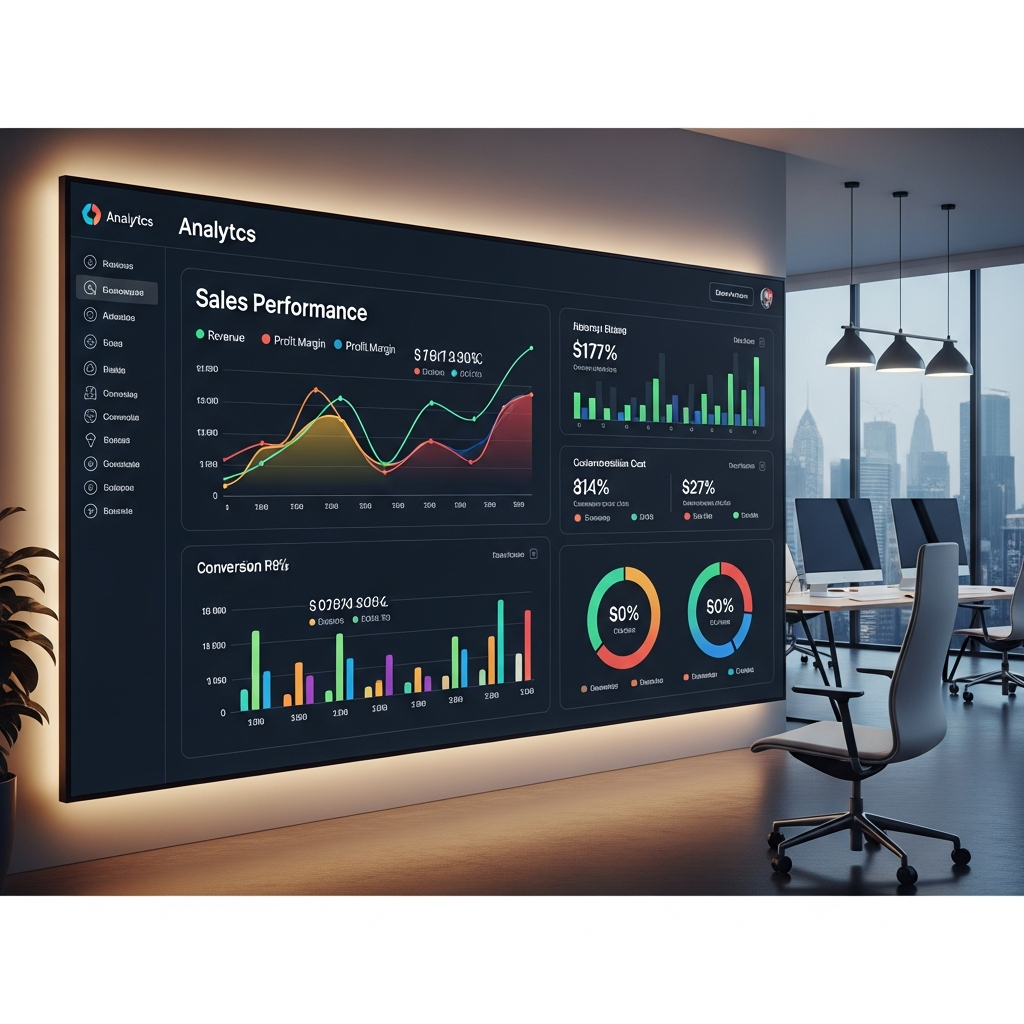
One of AI sales training's most powerful advantages is its ability to quantify results. TANPAN.AI's team collaboration features give managers visibility into each rep's growth trajectory:
- Skills radar chart: A visual breakdown of strengths and weaknesses across core selling competencies
- Progress curves: Performance trends over time, showing exactly where improvement is happening
- Team benchmarking: Side-by-side comparisons across team members to identify and replicate best practices
- Training ROI: Correlation analysis linking training investment to performance changes
A Practical Rollout Strategy for AI Sales Training
Phase 1: Establish a Baseline
At the outset, have all reps complete a standardized role-play assessment in the AI system. This initial evaluation becomes the benchmark against which all future progress is measured.
Phase 2: Build a Daily Practice Habit
Integrate AI training into daily routines. Fifteen to twenty minutes of AI-assisted role-play each day is far more effective than a half-day workshop once a month. TANPAN.AI's Google Calendar integration can automatically schedule practice slots in each rep's calendar.
Phase 3: Record and Analyze Real Conversations
When reps use TANPAN.AI in actual client meetings, the system captures and analyzes real sales interactions. These live cases become the most valuable training material available — far more relevant than any textbook scenario.
Phase 4: Build an Organizational Knowledge Base
Over time, the AI accumulates a library of successful approaches and best practices. This data naturally forms a company-specific sales playbook, enabling new hires to learn from proven winners and ramp up faster.
Industry Applications
Technology
Complex products with long sales cycles benefit enormously from AI training. Reps learn to articulate technical value propositions more clearly and handle sophisticated buyer objections with confidence.
Financial Services
In heavily regulated industries, AI can automatically detect non-compliant language or inappropriate promises during training, correcting issues before they reach real clients.
Real Estate
Showing and negotiation skills directly impact close rates. AI analyzes how agents respond to buyer concerns and suggests more effective approaches for common scenarios.
Medical Devices
In specialized sales environments requiring deep technical knowledge, AI verifies in real time whether reps are accurately communicating product specifications and clinical data.
Frequently Asked Questions
Will AI sales training replace human sales managers?
No. AI is a tool that amplifies a manager's coaching ability, not a replacement. AI excels at data analysis and real-time feedback, but setting sales strategy, nurturing client relationships, and motivating teams still require experienced human leadership.
How long does it take to implement AI sales training?
With TANPAN.AI, basic setup typically takes one to two days. The real investment is building the team's habit of consistent use — plan for a four-to-six-week adoption period.
How does AI handle different industry contexts?
TANPAN.AI supports multiple meeting modes — including interview, training, internal, and general meeting modes — and adjusts its analysis criteria and recommendations based on the selected context.
How is training data kept secure?
Sales training conversations may contain proprietary information. When evaluating AI training tools, verify that they provide robust data encryption, access controls, and compliance certifications.
How do you calculate the ROI of AI sales training?
Measure across three dimensions: ramp-up speed (time from hire to first closed deal), post-training performance lift, and manager time saved on coaching. According to McKinsey research, sales teams that adopt AI see an average revenue increase of 15% to 20%.
Conclusion
AI sales training is not a future concept — it is happening now. From session recording and analysis to real-time coaching, from role-play practice to measurable outcomes, AI is transforming sales training from an art into a measurable, repeatable science.
For companies that want to win in competitive markets, adopting AI sales training is not optional — it is a strategic necessity. TANPAN.AI provides an end-to-end solution from training to live selling, helping your sales team perform better in every client interaction.
Start today. Let AI become your most powerful sales coach.
Get Started Today
Try TANPAN.AI for free — Sign up and get 50 credits to fully explore all features. No credit card required.